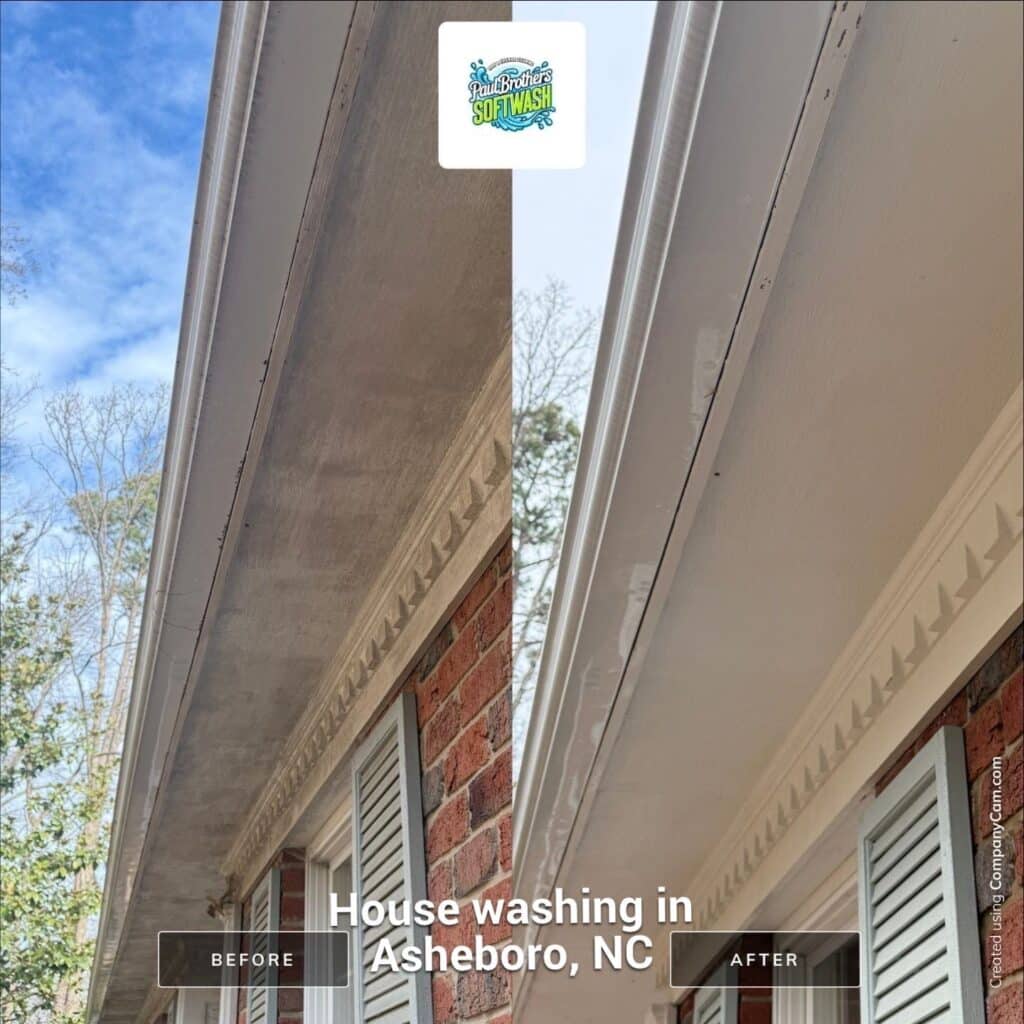
“Many homeowners do not realize it is better to kill algae instead of pressure washing it away when cleaning a house, roof, or driveway.” At first, this seems to work because the surface immediately looks cleaner. However, pressure washing alone often only removes what you can see.
The real problem is that algae has roots and spores that stay attached to the surface. If those spores are not treated, the algae usually comes back quickly. That is why it is important to kill algae instead of pressure washing it away.
“Why You Should Kill Algae Instead of Pressure Washing”
Algae grows in damp, shaded areas where moisture stays on the surface for long periods of time. In places like Jamestown, Asheboro, and other parts of the Piedmont Triad, algae commonly grows on:
- Vinyl siding
- Roof shingles
- Concrete driveways
- Brick
- Fences
- Decks
When a surface is only pressure washed, the visible layer of algae may disappear. However, tiny spores remain behind in cracks, pores, and textured areas.
These leftover spores begin growing again as soon as moisture returns. As a result, the same green or black stains often reappear within a few weeks or months.
“Pressure Washing Does Not Kill Algae at the Source”
Pressure washing uses force to remove dirt and surface buildup. Although that can help with loose debris, it does not always destroy the algae itself.
Think of algae like weeds in a yard. Cutting the weeds off at the surface may make the yard look better for a short time, but the weeds grow back because the roots are still there. Algae works the same way.
Instead of only rinsing the surface, exterior cleaning should target the living algae so it can no longer survive.
“Benefits When You Kill Algae Instead of Pressure Washing”
The best exterior cleaning methods use cleaning solutions that kill algae at the source before the surface is rinsed. This process breaks down the spores and stops them from continuing to spread.
By choosing to kill algae instead of pressure washing, homeowners usually notice several benefits:
Surfaces Stay Cleaner Longer
When algae is treated properly, it takes much longer to come back. Many homes stay clean for a year or longer instead of only a few months.
Less Risk of Damage
Trying to remove algae with too much pressure can damage many surfaces. High pressure can:
- Crack vinyl siding
- Remove paint
- Damage roof shingles
- Leave marks in wood
- Etch concrete
- Force water behind siding
Using lower pressure with the proper treatment is often safer and more effective.
The Surface Looks More Even
Pressure washing alone can leave behind streaks, lines, or uneven patches where some algae remains. Treating the algae first helps the entire surface clean more evenly.
“Why Roof Cleaning Should Kill Algae Instead of Pressure Washing”
Roof algae is one of the biggest examples of why you should kill algae instead of pressure washing it away.
The black streaks seen on many roofs are often caused by algae that feeds on the limestone in shingles. Although some people try to remove those streaks with a pressure washer, that can shorten the life of the roof.
High pressure can strip away the protective granules on shingles. Once those granules are damaged, the roof becomes more vulnerable to sun, rain, and future wear.
Instead, roof cleaning is usually done with a soft washing process that kills the algae first and allows the stains to break down safely over time. https://www.asphaltroofing.org/algae-discoloration-of-roofs/
“Driveway Cleaning Should Kill Algae Instead of Pressure Washing Too”
Concrete driveways and sidewalks often develop dark green or black areas, especially in shaded places.
Because concrete is porous, algae can grow below the surface. Even after pressure washing, some of that growth remains hidden in the concrete.
That is why many driveways look clean for only a short time before the stains return.
Treating the concrete first helps kill algae instead of pressure washing only the top layer away. As a result, the driveway usually stays cleaner much longer.
Signs Algae Was Only Pressure Washed and Not Killed
Sometimes you can tell when a surface was only pressure washed because the algae comes back quickly.
Common signs include:
- Green stains returning within a few weeks
- Dark roof streaks reappearing
- Uneven patches on siding
- Zebra-striping on concrete
- Areas that stay dirty longer than others
If this keeps happening, the algae may not have been fully treated.
The Best Way to Prevent Algae From Returning
Even after algae is killed, there are a few things homeowners can do to slow down future growth:
- Trim back trees and bushes
- Keep gutters flowing properly
- Allow more sunlight to reach damp areas
- Remove leaves from driveways and roofs
- Schedule regular exterior cleaning before heavy buildup occurs
These steps help reduce the moisture that algae needs to grow.
Final Thoughts
Pressure washing can make algae disappear for a short time, but it often does not solve the real problem. The algae spores remain below the surface and continue growing.
That is why it is better to kill algae instead of pressure washing it away. Proper treatment helps surfaces stay cleaner longer, reduces the risk of damage, and provides better long-term results.
Homeowners who understand the difference often find that treating algae correctly saves time, money, and repeated cleaning in the future.